
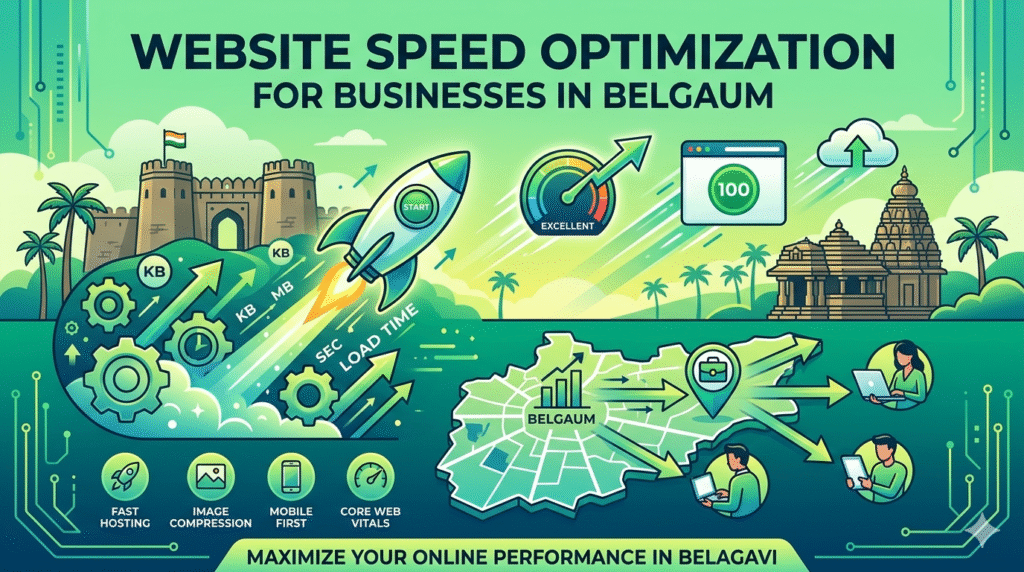
Title: Website Speed Optimization Guide for Businesses in Belgaum
In today’s digital era, website performance plays a crucial role in online success. One of the most important factors affecting website performance is loading speed. Website speed optimization ensures that your website loads quickly and provides a smooth experience for visitors. Faster websites not only improve user experience but also help increase search engine rankings.
For businesses in Belagavi, website speed optimization is especially important because local customers often search online for services, products, and training institutes. If your website loads slowly, visitors may leave before exploring your content. Optimizing website speed can help attract more users and increase engagement.
What is Website Speed Optimization?
Website speed optimization refers to improving the loading time and overall performance of a website. It involves optimizing different elements such as images, scripts, hosting, and website structure so that pages load faster for users.
Search engines like Google Search consider page speed an important ranking factor. Websites that load quickly are more likely to rank higher in search results because they provide a better user experience.
When a website loads quickly, visitors can easily navigate between pages, access content, and complete actions such as filling out forms or making purchases.
Importance of Website Speed
Website speed directly impacts several important aspects of online performance.
User Experience
Visitors expect websites to load within a few seconds. If a page takes too long to load, users may lose interest and leave the website. Fast websites create a smooth browsing experience and encourage visitors to stay longer.
Search Engine Rankings
Search engines prefer websites that provide a good user experience. Faster websites are more likely to appear higher in search results. This increases visibility and brings more organic traffic.
Conversion Rates
Website speed also affects conversion rates. When pages load quickly, visitors are more likely to complete actions such as signing up for a course, purchasing products, or contacting a business.
For local businesses in Belagavi, improving website speed can help attract more customers and generate leads.
Factors That Affect Website Speed
Several technical factors influence how quickly a website loads.
Large Image Files
High-resolution images can significantly slow down website loading speed. When images are too large, browsers take longer to download them.
Optimizing images by compressing their size helps improve page loading time.
Excessive JavaScript and CSS
Websites often use JavaScript and CSS files to enhance design and functionality. However, too many large scripts can slow down page loading.
Minifying these files reduces their size and improves performance.
Poor Web Hosting
The quality of your web hosting service also affects website speed. Shared hosting with limited resources may cause slow loading times during high traffic periods.
Choosing reliable hosting can improve website performance.
Too Many Plugins
Platforms such as WordPress allow website owners to install plugins for additional features. However, installing too many plugins can slow down the website.
Using only necessary and optimized plugins helps maintain faster performance.
How to Optimize Website Speed
There are several strategies that can help improve website speed and performance.
Image Optimization
Images should be compressed without losing quality. Optimized images load faster and reduce the overall size of web pages.
Common image formats include JPEG, PNG, and WebP. Using modern formats like WebP can further improve loading speed.
Enable Browser Caching
Browser caching allows websites to store certain files on a visitor’s device. When the visitor returns to the website, these files load from the local cache instead of downloading again from the server.
This significantly reduces loading time for repeat visitors.
Minify CSS and JavaScript
Minification removes unnecessary spaces, comments, and characters from CSS and JavaScript files. This reduces file size and improves loading speed.
Many website optimization tools automatically perform this process.
Use Content Delivery Networks
A Content Delivery Network (CDN) distributes website content across multiple servers located in different regions. When users access the website, content is delivered from the nearest server.
This reduces loading time and improves performance for visitors from different locations.
Mobile Speed Optimization
Today, a large percentage of website traffic comes from mobile devices. Because of this trend, mobile speed optimization has become essential.
Search engines use mobile-first indexing, which means they evaluate the mobile version of a website when determining search rankings.
Mobile speed optimization includes:
- Responsive website design
- Optimized images for mobile devices
- Reduced scripts and animations
- Faster mobile hosting
Ensuring that your website loads quickly on smartphones helps improve user engagement and search rankings.
Tools for Testing Website Speed
Website owners can use several tools to analyze and improve website performance.
One of the most commonly used tools is Google PageSpeed Insights, which analyzes website speed and provides suggestions for improvement.
Another useful tool is Google Analytics, which helps monitor user behavior and website performance.
These tools provide valuable insights into loading speed, page performance, and optimization opportunities.
Common Website Speed Issues
Many websites experience speed problems due to technical issues. Some of the most common issues include:
- Unoptimized images
- Slow hosting servers
- Large website files
- Poor website structure
- Excessive scripts and plugins
Regular performance audits help identify and resolve these problems before they impact user experience.
Benefits of Website Speed Optimization
Improving website speed offers several advantages for businesses and website owners.
Improved User Experience
Fast-loading websites make it easier for visitors to access information and navigate through pages.
Higher Search Engine Rankings
Optimized websites are more likely to rank higher in search engine results, bringing more organic traffic.
Increased Website Traffic
When a website loads quickly, visitors are more likely to explore multiple pages, increasing overall engagement.
Better Conversion Rates
Fast websites encourage users to complete actions such as making purchases, filling out forms, or subscribing to newsletters.
For businesses in Belagavi, these benefits can significantly improve online visibility and customer engagement.
Best Practices for Maintaining Website Speed
Maintaining website speed requires continuous monitoring and optimization.
Some best practices include:
- Regularly testing website performance
- Updating website plugins and software
- Optimizing new images before uploading
- Monitoring website traffic and server performance
- Reducing unnecessary scripts and features
These practices help ensure that your website continues to perform efficiently over time.
Conclusion
Website speed optimization is an essential part of modern digital marketing and website management. Faster websites provide better user experiences, improve search engine rankings, and increase conversion rates.
By optimizing images, reducing unnecessary scripts, enabling caching, and using reliable hosting, businesses can significantly improve website performance.
For companies and digital marketers in Belagavi, optimizing website speed can help attract more visitors, engage local customers, and achieve long-term online success. Regular monitoring and continuous optimization ensure that websites remain fast, efficient, and competitive in the digital marketplace.